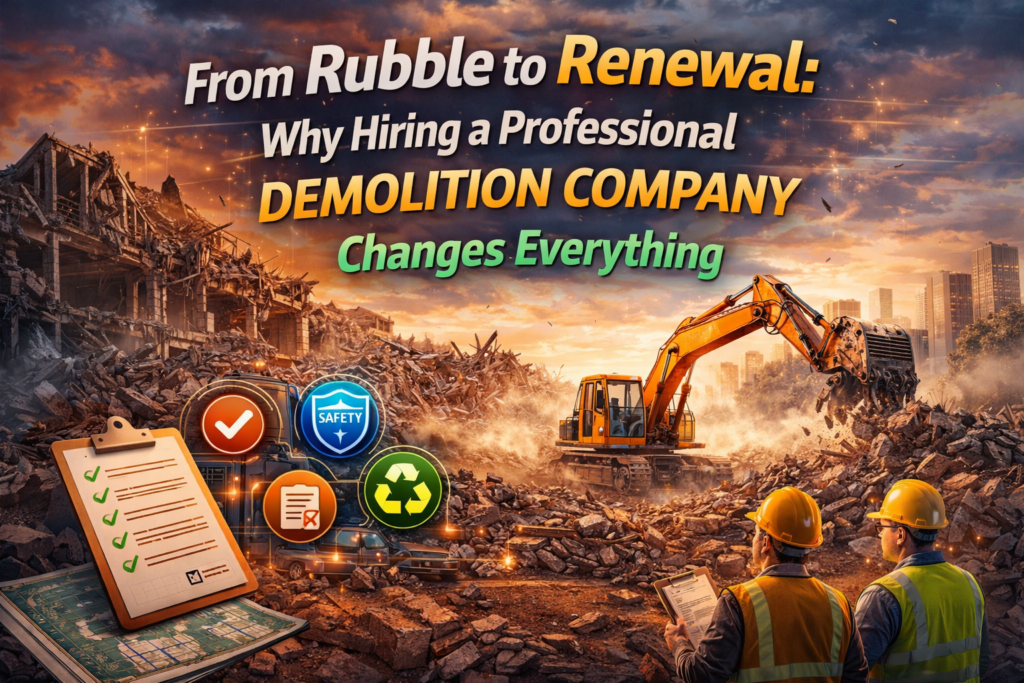
Whether you are tearing down an old garage, clearing a commercial property, or making way for a brand-new build, demolition is rarely as simple as it looks. Many property owners underestimate what goes into bringing a structure down safely, legally, and efficiently. The truth is, professional demolition is a skilled trade and choosing the right company can mean the difference between a smooth project and a costly, dangerous nightmare.
In this post, we break down everything you need to know about working with a professional demolition contractor, from planning and permits to cleanup and what comes next.
The Hidden Complexity Behind Every Demolition Projec
Tearing something down sounds straightforward. In reality, every demolition project carries layers of complexity that only become visible once the work begins. Older structures may contain asbestos, lead paint, or other hazardous materials that require careful handling before a single wall comes down. Underground utilities gas lines, water pipes, electrical conduits must be identified and safely disconnected. Load-bearing elements must be addressed in the right sequence to prevent uncontrolled collapse.
Professional demolition crews are trained to assess all of these factors before breaking ground. They conduct thorough site evaluations, identify risks, and build a removal plan that keeps workers, neighbors, and the surrounding environment protected throughout the process.
Skipping this step by going the DIY route or hiring an unqualified crew might save money upfront but it routinely leads to accidents, regulatory fines, and project delays that cost far more in the long run.
Permits, Regulations, and the Legal Side of Demolition
One of the most overlooked aspects of demolition work is the permitting process. Most municipalities require demolition permits before any structural work can begin. These permits exist to protect public safety and ensure that hazardous materials are handled and disposed of properly.
A licensed demolition company handles permit applications as a routine part of their process. They know which local agencies to contact, what documentation is required, and how to avoid the delays that come from incomplete filings. For property owners managing demolition for the first time, navigating this bureaucratic layer on their own can be both time-consuming and stressful.
Beyond permits, there are environmental regulations governing the disposal of construction debris, salvageable materials, and hazardous waste. A reputable demolition contractor will have established relationships with licensed disposal facilities and recycling centers, ensuring that debris is handled in full compliance with state and local law.
Residential vs. Commercial Demolition: Understanding the Difference
Not all demolition projects are created equal. Residential demolition tearing down a single-family home, a detached garage, or an outbuilding requires a different approach than commercial or industrial work.
Residential projects tend to focus on minimizing disruption to neighboring properties, protecting existing landscaping, and working within tighter site constraints. Commercial demolition, on the other hand, often involves larger structures, more complex utility disconnections, stricter regulatory oversight, and the need for heavy equipment that must be staged and operated in compliance with local noise and traffic ordinances.
Experienced demolition companies understand these distinctions and adjust their methods accordingly. Whether the job involves interior selective demolition removing walls or fixtures while leaving the rest of the structure intact or full structural takedown, the right crew will have the equipment and expertise to match the scope of work.
The Equipment That Makes the Difference
Professional demolition companies invest heavily in specialized equipment because the right machinery makes every project safer, faster, and cleaner. Excavators fitted with hydraulic attachments, skid-steer loaders, concrete crushers, and high-reach demolition equipment are among the tools that turn a complex teardown into a controlled, efficient process.
Beyond the machines themselves, experienced operators matter enormously. Operating demolition equipment in tight urban environments, around underground utilities, or near occupied structures requires precision and experience that cannot be improvised. When evaluating contractors, always ask about the experience level of their equipment operators not just the age of the machines.
Salvage and Recycling: A Responsible Approach to Demolition
Modern demolition is not just about destruction it increasingly involves thoughtful deconstruction and material recovery. Brick, timber, steel, copper, concrete, and other materials from demolished structures can often be salvaged, recycled, or repurposed rather than sent to a landfill.
This approach benefits everyone. Property owners may receive credit for salvaged materials. The environment benefits from reduced waste. And communities sometimes recover valuable architectural elements that can be reused in new construction.
When selecting a demolition contractor, ask about their approach to salvage and recycling. A company committed to responsible demolition will have clear processes for separating recoverable materials from debris and will work with local recycling facilities to minimize landfill impact.
What to Look for When Choosing a Demolition Contractor
With so much at stake, choosing the right demolition company deserves serious attention. Here are the key factors to evaluate before signing a contract:
Licensing and Insurance: Always verify that a contractor holds the appropriate state and local licenses for demolition work. Equally important is comprehensive insurance coverage both general liability and workers’ compensation to protect you from financial exposure if something goes wrong on your property.
Experience and References: Ask for a portfolio of completed projects similar in scope to yours. Speak with previous clients. A contractor with a strong track record will welcome this scrutiny.
Transparent Pricing: Demolition quotes should be detailed and itemized, not vague lump sums. Understand what is included debris removal, permit fees, utility disconnections and what might trigger additional charges.
Clear Communication: From initial consultation through project completion, a good contractor keeps you informed. They explain the timeline, flag potential complications early, and respond promptly to questions.
Safety Record: Ask about the company’s safety protocols and their history of workplace incidents. A contractor who takes safety seriously protects not only their crew but also your property and your liability exposure.
Planning Your Demolition Project: A Step-by-Step Overview
Understanding the general flow of a demolition project helps property owners set realistic expectations and work more effectively with their contractor. Most projects follow a similar sequence:
Site Assessment: The contractor evaluates the structure, identifies hazardous materials, and reviews utility connections.
Permitting: Applications are filed with the appropriate municipal authorities. Timelines vary by jurisdiction.
Utility Disconnection: Gas, water, and electrical services are safely shut off and disconnected in coordination with local utility providers.
Hazardous Material Abatement: Any asbestos, lead paint, or other regulated materials are remediated by licensed specialists before demolition begins.
Structural Demolition: The actual teardown proceeds according to the engineered removal plan.
Debris Removal and Site Cleanup: All waste materials are hauled away and the site is graded and cleared for its next use.
Making the Right Call for Your Property
Whether you are a homeowner clearing space for a new addition, a developer preparing a commercial site, or a business owner renovating an existing facility, professional demolition is an investment in doing things right the first time. The risks of cutting corners safety incidents, regulatory penalties, project delays, and hidden costs far outweigh any short-term savings.
The best thing you can do at the start of any demolition project is to connect with an experienced, licensed contractor who can walk you through your options, give you an honest assessment of the scope and cost, and build a clear plan for getting the work done safely and on schedule.
If your project is in the Ann Arbor area, take the first step today and Contact JS Wrecking Co Ann Arbor to discuss your demolition needs with a team that brings experience, professionalism, and local knowledge to every job.